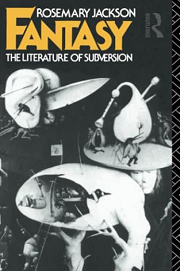
Fantasy: The Literature of Subversion by Rosemary Jackson

Fairy tales, nightmares, and the fantastic collide in a provocative study of how fantasy challenges the world as we know it. Sharp, thoughtful, and influential, Fantasy: The Literature of Subversion reveals the radical heart beating beneath the genre’s wonders.

Have you read this book? Share what you liked (or didn’t) and get personalized recommendations.

Start or resume Shelf Talk
Love Fantasy: The Literature of Subversion but unsure what to read next?

These picks are popular with readers who enjoyed this book. Possible spoilers below.

In Fantasy: The Literature of Subversion, did you enjoy the theoretical map of the fantastic as a mode that destabilizes realism?

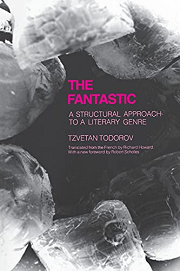
The Fantastic: A Structural Approach to a Literary Genre by Tzvetan Todorov

If you were drawn to how Jackson frames the fantastic as a challenge to the "real"—think of her readings that move between the uncanny eeriness of Hoffmann’s "The Sandman" (with Nathaniel’s fixation on Olympia) and the marvelous fluidity of Alice’s language-games—you’ll appreciate Todorov’s precise toolkit. He formalizes that hesitation between the uncanny and the marvelous that underpins Jackson’s chapters, giving you a framework that clarifies why texts like "The Turn of the Screw" keep us suspended between psychological and supernatural explanations.

In Fantasy: The Literature of Subversion, did you enjoy a clear taxonomy of how fantasy narratives work across different modes?

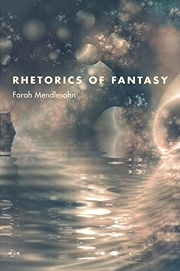
The Rhetorics of Fantasy by Farah Mendlesohn

You liked how Jackson showed fantasy as subversive across examples—from Alice upending Victorian logic to Kafka’s Gregor Samsa embodying estranged desire—so you’ll love Mendlesohn’s crisp categories (portal-quest, immersive, intrusive, liminal). Mapping Jackson’s examples, Alice’s Adventures in Wonderland becomes a portal text, while uncanny irruptions like in "The Sandman" read as intrusive. It’s a practical extension of Jackson’s theory that lets you diagnose how a given text does its reality-bending work.

In Fantasy: The Literature of Subversion, did you enjoy deep psychoanalytic excavation of desire, repression, and the uncanny in folk narrative?

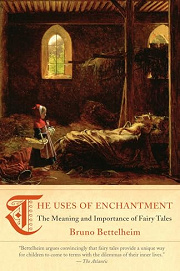
The Uses of Enchantment: The Meaning and Importance of Fairy Tales by Bruno Bettelheim

If Jackson’s psychoanalytic threads—her engagement with Freud’s uncanny via Hoffmann’s automaton or the split self behind "Jekyll and Hyde"—were your highlight, Bettelheim offers a sustained dive into how tales externalize inner conflicts. When he reads "Hansel and Gretel" as a drama of hunger, abandonment, and growth, or disentangles Oedipal anxieties in "Snow White," he’s doing for folk stories what Jackson does for the modern fantastic: surfacing the desires that realism represses.

In Fantasy: The Literature of Subversion, did you enjoy self-aware exploration of how stories expose and remake reality?

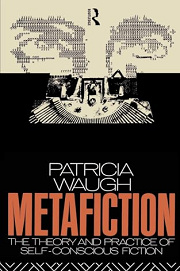
Metafiction: The Theory and Practice of Self-Conscious Fiction by Patricia Waugh

Jackson emphasizes how fantasy reveals the cracks in the real—her use of Borges and the linguistic play in Alice shows fiction making its own rules visible. Waugh tracks that self-conscious move across writers like Borges and Calvino, where narratives like "Tlön, Uqbar, Orbis Tertius" fabricate worlds that rewrite ours. If you enjoyed Jackson’s claim that fantasy lays bare the constructedness of reality, Waugh gives you a field guide to texts that turn that claim into narrative method.

In Fantasy: The Literature of Subversion, did you enjoy symbolic and cultural readings of fairy-tale figures and motifs?

From the Beast to the Blonde: On Fairy Tales and Their Tellers by Marina Warner

Jackson’s close attention to images—the threatening eye in "The Sandman," the bodily metamorphoses of Kafka—shows how symbols carry subversive charge. Warner extends that lens to figures like the witch, the stepmother, and Beauty, tracing how their meanings shift with cultural anxieties. If Jackson’s take on Alice’s mutable bodies and unstable signs intrigued you, Warner’s analysis of recurring motifs will deepen how you read symbolism as a social text.