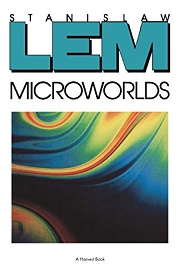
Microworlds by Stanislaw Lem

A master of speculative thought turns his keen eye on the genre itself. In Microworlds, Stanisław Lem dissects science fiction’s ideas, ambitions, and blind spots with razor-sharp wit and philosophical rigor—offering a provocative tour through the possibilities of the future.

Have you read this book? Share what you liked (or didn’t) and get personalized recommendations.

Start or resume Shelf Talk

Love Microworlds but unsure what to read next?

These picks are popular with readers who enjoyed this book. Possible spoilers below.

In Microworlds, did you enjoy rigorous, philosophical thought-experiments about infinity, authorship, and reality?

Labyrinths by Jorge Luis Borges

If what hooked you in Microworlds was Lem’s head-on grappling with ideas—like his taxonomy of SF’s possibilities in “Metafantasia” or his unsparing, concept-first reading of Philip K. Dick—then Borges’s Labyrinths will feel like stepping into those arguments as living art. Stories such as “The Library of Babel” and “Tlön, Uqbar, Orbis Tertius” turn the same questions Lem poses about knowledge, language, and constructed realities into crystalline parables—you get the intellectual rigor of the essays, but embodied in perfectly engineered fictions.

In Microworlds, did you enjoy playful, satirical riffs on scientific ideas delivered with sly wit?

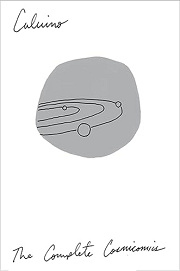
Cosmicomics by Italo Calvino

You enjoyed the way Microworlds punctures clichés with dry, barbed humor—those moments where Lem skewers pulp formulas while still reveling in big ideas. Cosmicomics channels that same spirit into fable-like tales: Qfwfq narrates capers like “The Distance of the Moon” and “All at One Point,” transforming cosmology into mischievous, witty speculation. It’s the same blend of brainy concept-play and sly satire that Lem deploys when he dismantles lazy space opera tropes.

In Microworlds, did you enjoy deep, formalist criticism that dissects how SF works at the sentence and story level?

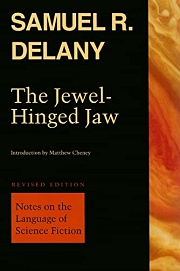
The Jewel-Hinged Jaw by Samuel R. Delany

If the charge you got from Microworlds came from essays like “On the Structural Analysis of Science Fiction” and Lem’s precise close-reading of Dick—where he insists SF be judged by its unique protocols—Delany’s The Jewel-Hinged Jaw is your next clinic. Pieces like “About 5,750 Words” and “Science Fiction and ‘Literature’—or, The Conscience of the King” anatomize worldbuilding, neologism, and narrative information with exacting care, giving you that same exhilarating sense of SF as a disciplined, analyzable machine for ideas.

In Microworlds, did you enjoy bite-size, concept-dense pieces you can savor one at a time?

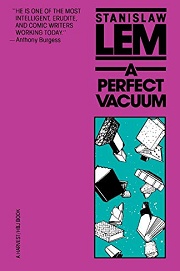
A Perfect Vacuum by Stanisław Lem

If part of the appeal of Microworlds was its modular, dip-in structure—self-contained essays like “Science Fiction: A Hopeless Case—With Exceptions” that you can read and chew on—then you’ll love the audacious miniatures in A Perfect Vacuum. Lem reviews nonexistent books with surgical wit; pieces like “Gigamesh” turn criticism into speculative architecture, giving you the same compact, idea-saturated pleasures, now refracted through virtuoso metafiction.

In Microworlds, did you enjoy lucid, humane essays that interrogate the ethics and craft of speculative fiction?

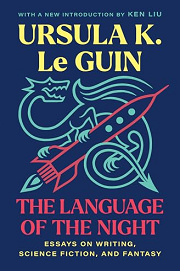
The Language of the Night by Ursula K. Le Guin

Appreciated how Microworlds made complex arguments in crisp, no-nonsense prose—say, Lem’s clear-eyed dismantling of SF’s lazy shortcuts and his principled defense of rigor? Le Guin’s The Language of the Night brings that same clarity and moral focus. Essays like “From Elfland to Poughkeepsie” and “The Carrier Bag Theory of Fiction” deliver sharp, accessible insights into voice, worldbuilding, and responsibility—big ideas stated plainly, without hand-waving.