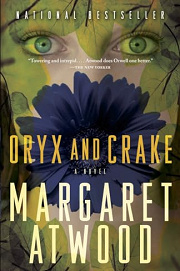
Oryx and Crake by Margaret Atwood

In a bioengineered near-future, a lone survivor sifts through memories of a brilliant friend and the enigmatic figures who shaped a shattered world. Chilling, razor-sharp, and darkly prophetic, Oryx and Crake explores how ambition and desire rewrite the human story.

Have you read this book? Share what you liked (or didn’t) and get personalized recommendations.

Start or resume Shelf Talk
Love Oryx and Crake but unsure what to read next?

These picks are popular with readers who enjoyed this book. Possible spoilers below.

In Oryx and Crake, did you enjoy wandering the ruins after a man-made plague and piecing together what humanity means?

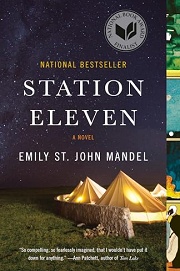
Station Eleven by Emily St. John Mandel

If Snowman picking through the wreckage—sleeping in trees to avoid pigoons and remembering Paradice—hooked you, you’ll love how Station Eleven follows Kirsten and the Traveling Symphony across a hushed, plague-emptied North America. Like the aftermath of Crake’s BlyssPluss release, the novel lingers on scavenged airports, fragile communities, and the question of what stories we carry when the world ends. It’s tender and eerie in the same way Snowman’s memories of Oryx are: a meditation on loss, survival, and the scraps of culture that outlast catastrophe.

In Oryx and Crake, did you enjoy bioengineered ecologies, corporate gene hacks, and climate-ruined futures?

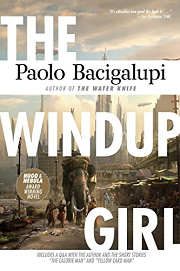
The Windup Girl by Paolo Bacigalupi

If the spliced pigoons, rakunks, and the BlyssPluss project’s corporate ruthlessness fascinated you, The Windup Girl pushes even deeper into biotech’s fallout. In a heat-swollen Bangkok held together by levees, calorie companies manipulate seeds the way Crake’s backers toyed with genomes. Emiko—a lab-made “windup”—and agents like Anderson navigate a world where engineered plagues and IP-enforced famine echo the CorpSeCorps mentality and Paradice’s godlike tinkering. It’s the same chilling question: what happens when profit and ingenuity outrun ethics—and nature fights back?

In Oryx and Crake, did you enjoy a braided, time-hopping structure revealing cause-and-effect across eras of human ambition?

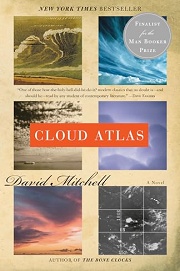
Cloud Atlas by David Mitchell

If the way Oryx and Crake spirals between Snowman’s present and Jimmy’s past pulled you in—piecemeal memories of Oryx, the Paradice dome, the BlyssPluss countdown—Cloud Atlas amplifies that pleasure with interlocking narratives that echo across centuries. Like the slow reveal of Crake’s design, the Sonmi~451 sections expose corporate-created humans and the costs of engineered obedience, while other timelines show how small choices ripple forward. You’ll get the same puzzle-box satisfaction of assembling a grand design from fractured, time-shifted pieces.

In Oryx and Crake, did you enjoy a protagonist shaped by catastrophe whose choices blur the line between victim and perpetrator?

American War by Omar El Akkad

If you were compelled by Jimmy’s complicity—benefiting from compounds, enabling Crake, then shepherding the Crakers—American War gives you Sarat Chestnut, a survivor whose path through camps, militias, and revenge is as uneasy and human as Snowman’s. The book, like the aftermath of Crake’s pandemic, shows how systems break people and how people, in turn, make ruinous choices. You’ll recognize the same moral grayness that runs from CorpSeCorps boardrooms to the Paradice lab: good intentions curdled by trauma and power.

In Oryx and Crake, did you enjoy quiet, character-driven science fiction that explores the ethics of engineered lives?

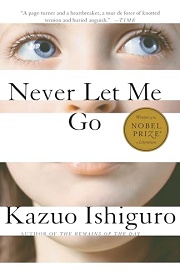
Never Let Me Go by Kazuo Ishiguro

If what gripped you was not the tech readouts but the human fallout—Jimmy/Oryx/Crake’s triangle, the Crakers’ childlike questions, the hush around BlyssPluss—Never Let Me Go works the same soft-SF magic. Kathy, Ruth, and Tommy grow up inside a humane-seeming system that hides a biotech horror, much like the glossy calm of the compounds before the release. It’s intimate, understated, and devastating, asking the same questions Oryx and Crake does about creation, consent, and what we owe the beings we make.