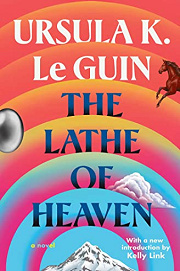
The Lathe Of Heaven by Ursula K. Le Guin

When a man’s dreams begin to rewrite reality, a weary therapist must decide whether to guide them—or stop them—before the world is remade. Blending philosophical intrigue with eerie suspense, The Lathe Of Heaven asks what happens when wishful thinking becomes a weapon.

Have you read this book? Share what you liked (or didn’t) and get personalized recommendations.

Start or resume Shelf Talk

Love The Lathe Of Heaven but unsure what to read next?

These picks are popular with readers who enjoyed this book. Possible spoilers below.

In The Lathe Of Heaven, did you enjoy the disorienting slide between manufactured realities and waking life?

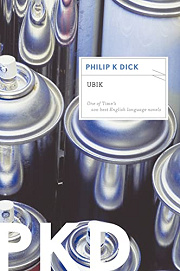
Ubik by Philip K. Dick

If George Orr’s effective dreams and Dr. Haber’s Augmentor thrilled you with their reality-warping consequences, you’ll love how Ubik keeps pulling the rug out from under your feet. As Joe Chip’s world regresses and everyday objects demand coins to function, you’ll get that same eerie, playful dread you felt when Orr’s “fixes” spawned gray-skinned humanity and unexpected alien visitations. It’s a fast, trippy descent into competing versions of truth—with a mysterious product called Ubik lurking like Orr’s dreams: potent, inexplicable, and maybe the only way out.

In The Lathe Of Heaven, did you enjoy the ethical minefield of someone wielding near-divine power over others’ realities?

The Three Stigmata Of Palmer Eldritch by Philip K. Dick

Did Dr. Haber’s calm, clinical manipulation of Orr’s dreams—and the way he rationalizes playing god—get under your skin? In The Three Stigmata of Palmer Eldritch, Eldritch uses a drug to yank entire populations into a synthetic paradise where he controls the rules. As with Haber’s “benevolent” interventions that erase war but also erase identity, this novel forces you to ask who gets to decide the shape of reality, and what moral lines are crossed when you do. It’s the same unsettling dance between salvation and exploitation that made Haber’s sessions so compelling.

In The Lathe Of Heaven, did you enjoy probing existential questions through a mysterious intelligence that reshapes perception?

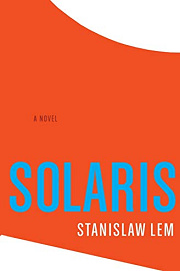
Solaris by Stanislaw Lem

If the philosophical tug-of-war in The Lathe of Heaven—from Heather Lelache challenging Orr’s passivity to the haunting consequences of each “wish”—stayed with you, Solaris goes just as deep. On a station above the oceanic planet, Kelvin confronts manifestations pulled from his psyche, much like Orr’s dreams externalize desire and guilt. Where Haber reduces people to data points, Lem asks whether human understanding can ever grasp an alien mind without turning it into a mirror. Expect meditations on memory, love, and the limits of knowledge that echo Orr’s quiet, tortured ethics.

In The Lathe Of Heaven, did you enjoy an intimate, character-first lens on the cost of “improving” a human mind?

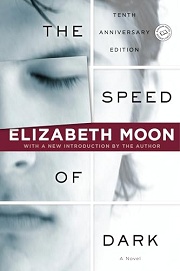
The Speed of Dark by Elizabeth Moon

If you were moved by George Orr’s quiet decency—and horrified as others pushed him toward “fixes” they wanted—The Speed of Dark offers that same intimate moral pressure. Lou Arrendale, an autistic programmer, faces a procedure that could change who he is, much like Haber’s relentless nudges to reshape Orr’s dreams in the name of progress. The voice is personal and piercing, the stakes deeply human, and the ethical questions about consent and identity are as urgent as when Orr weighs the price of a world without war—or without Heather.

In The Lathe Of Heaven, did you enjoy soft-SF focus on society and selfhood over tech, with world-shaping choices rippling through generations?

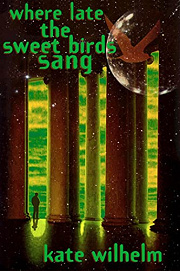
Where Late the Sweet Birds Sang by Kate Wilhelm

If the social ripples from Orr’s dream-changes—erasing racism in one stroke, triggering an alien crisis in another—fascinated you more than gadgetry, Wilhelm’s novel will hit the spot. After catastrophe, a community turns to cloning, only to confront unexpected shifts in individuality and creativity. Like Haber’s grand plans that ignore human nuance, the community’s “solution” breeds problems no one anticipated. It’s thoughtful, low-key, and humane, with the kind of speculative what-if that made the Augmentor’s consequences so eerily plausible.