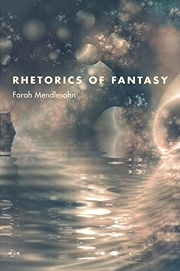
The Rhetorics of Fantasy by Farah Mendlesohn

How does fantasy actually work? In clear, incisive prose, Farah Mendlesohn charts the modes that shape the genre’s magic and meaning. From portals to immersive worlds, The Rhetorics of Fantasy offers a smart, approachable guide for readers and writers who want to see the machinery behind the wonder.

Have you read this book? Share what you liked (or didn’t) and get personalized recommendations.

Start or resume Shelf Talk
Love The Rhetorics of Fantasy but unsure what to read next?

These picks are popular with readers who enjoyed this book. Possible spoilers below.

In The Rhetorics of Fantasy, did you enjoy the rigorous taxonomy and critical framework for understanding fantasy?

The Cambridge Companion to Fantasy Literature by Edward James and Farah Mendlesohn

If Mendlesohn’s breakdown of portal-quest, immersive, intrusive, and liminal modes—and her close readings of works like Tolkien and Lewis—lit you up, you’ll love how this collection maps the field from multiple angles. Essays by scholars like Brian Attebery and John Clute unpack everything from children’s fantasy to urban fantasy, giving you the same satisfying “aha” moments you had when Mendlesohn parsed how a book like The Lion, the Witch and the Wardrobe constructs its readerly contract.

In The Rhetorics of Fantasy, did you enjoy the playful examination of how stories talk about themselves?

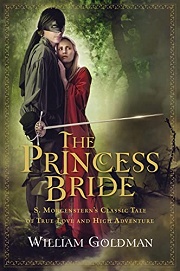
The Princess Bride by William Goldman

Mendlesohn often dwells on the “contract” between text and reader—how a narrative tells you what kind of fantasy it is. The Princess Bride makes that contract visible on the page: Goldman’s faux-editor persona, the interruptions, and the “good parts” framing let you watch the mechanics of storytelling at work. If you enjoyed how Mendlesohn dissects narrative signals in, say, portal-quest fantasies, you’ll relish how Buttercup, Westley, and the S. Morgenstern conceit turn the act of reading into part of the adventure.

In The Rhetorics of Fantasy, did you enjoy probing essays on why and how fantasy works?

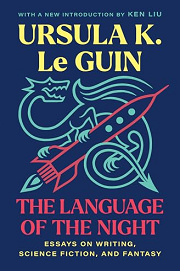
The Language of the Night by Ursula K. Le Guin

You appreciated how Mendlesohn explains the why behind fantasy’s effects—why immersive worlds like Middle-earth operate differently than intrusive tales that unsettle the mundane. Le Guin’s essays (especially “From Elfland to Poughkeepsie”) tackle the same questions with luminous clarity, reflecting on style, morality, and truth in fantasy while drawing on her own Earthsea and on Tolkien—much like the theoretical scaffolding you enjoyed in The Rhetorics of Fantasy.

In The Rhetorics of Fantasy, did you enjoy how fantasy encodes social anxieties and unspoken desires beneath the surface?

Lud-in-the-Mist by Hope Mirrlees

If Mendlesohn’s account of the liminal mode—where the marvelous leaks into the ordinary—stuck with you, Mirrlees’s classic is the perfect case study. Mayor Nathaniel Chanticleer’s anxious, buttoned-up town is haunted by illicit fairy fruit, smuggling trials, and dreams that won’t stay put. It’s the very kind of text Mendlesohn highlights when she shows how fantasy’s surface civility masks deeper symbolic tensions.

In The Rhetorics of Fantasy, did you enjoy a self-contained deep dive into fantasy’s craft and possibilities?

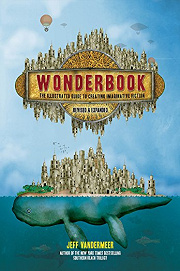
Wonderbook by Jeff VanderMeer

Part of what you enjoyed in Mendlesohn is that it stands alone as a comprehensive map of how fantasy works. Wonderbook offers a similarly self-contained tour—visual models, craft essays by Neil Gaiman, Ursula K. Le Guin, and Michael Moorcock, and case studies that echo the way The Rhetorics of Fantasy makes theory practical. You’ll get the same feeling of a complete toolkit you can keep returning to.